Thursday, September 4, 2008

The Future of Cloud Computing; Cloud Computing Is The Future

Peter Bell, a general partner at Highland Capital, gives Forbes a wonderful interview on all things cloud computing. Read the whole thing.

Takeaways:
Cloud computing isn't just hype. "There will be a lot of carnage. But there will be some good companies that emerge, similar to Web 2.0. Was Web 2.0 a buzzword? Yes. But when you look at Facebook or MySpace or Gmail, there's pretty significant value there."

Your concerns are real. "If you have a cloud and it fails, there isn't anyone to call. That may be OK if you're bootstrapping your operation, because you may be able to recreate your infrastructure. But as you get into mission-critical or more established business, there will need to be multiple levels of solutions."

Start-ups should be looking to be adopted by larger platforms."There are too many companies looking for 10% of the market. What we're looking for are a couple things. There has to be enough value in the features they offer or in their subcontractor capabilities that customers will demand those features or capabilities. If management capabilities are optimized for the cloud, then the customer will tell the likes of IBM that they need to include it."

TrackBack URL for this entry:
http://bizbox.slate.com/cgi-bin/mt/mt-t.cgi/176

The Rise (and Possible Fall) of Ultraportable Laptops


David Haskin, Computerworld.com
Thursday, August 21, 2008 2:34 PM PDT

For some users, the new generation of ultraportable notebooks comes close to embodying the Holy Grail for road warriors. Their laptop-like keyboards make them more usable for typing tasks than smart phones, but they are lighter and cheaper than traditional laptops. The original Asus Eee PC, for instance, cost about $400 and weighed about two pounds when it was introduced last October.

However, while pundits and technology journalists have lavished attention on these products, skeptics have raised questions. For instance, is there anything really special about these devices, or do they just represent old technology in new packaging? Are users as enthusiastic about these tiny laptops as the pundits are? Will they fade away like so many other "next big things"? And perhaps the oddest question: What do we call these things, anyway?

"It's way too early to talk about this being a viable product category," says Avi Greengart, mobile device research director at Current Analysis Inc. "I'm not sure how much of a market there is for them, particularly with subnotebooks like MacBook Air with [larger] keyboards and displays getting thinner and lighter. And you can get some real work done on, say, an iPhone or a Nokia E-series smart phone."

Not surprisingly, vendors and other proponents strongly disagree.

"The Eee PC has successfully explored user segments that have been ignored by other notebook vendors," says Kevin Huang, senior director of marketing at Asustek Computer Inc. "For example, a lot of kids use their parents' notebooks, but they are just too heavy to carry to school. But at two pounds, kids can easily put [ultraportables] in their backpacks." Huang insists that, over time, this product category will expand to become attractive to many types of users.

Ultrasmall Laptops -- Not a New Phenomenon


If small laptops like the Asus Eee, MSI Wind, Everex CloudBook and HP Mini-Note 2133 give you a sense of déjà vu, it's because these are hardly the first devices of that particular size and shape. For instance, Hewlett-Packard Co. introduced the 3-lb. Omnibook 300 in 1993, and that 386-based device developed a small but loyal following.

In the late '90s, several vendors released clamshell devices based on Windows CE (now called Windows Mobile), such as NEC's MobilePro series. These devices looked like tiny laptops, although they used a PDA operating system and could only handle "pocket" versions of desktop applications.

Another similar type of device is the ultramobile PC (UMPC). These devices -- such as the Samsung Q1 Ultraand OQO -- which started appearing in 2006, use a variant of Windows and typically have touch screens as small as 5 in. They have never caught on broadly, perhaps because prices initially approached $2,000 and because their keyboards are only slightly more spacious than those on smart phones. However, prices have recently dropped closer to $1,000, and they have found a home in vertical markets such as hospitals and warehouses.

The new crop of ultraportables differ from UMPCs in that they look and feel like traditional clamshell notebooks -- they're just smaller and lighter. One product that some classify as one of the first of today's ultraportables is the One Laptop Per Child (OLPC) device, which is aimed at children in developing nations. At one point, Intel Corp. was in discussions to provide processors for the OLPC effort; the company's ClassMate device is seen by some as both a competitor to OLPC and a prototype for its more commercial ultraportables.

The Name Game

One peculiarity of this latest generation of tiny laptops is that there's no agreement about what to call them. Intel, which wants to be the dominant chip maker for this class of devices, calls them "netbooks."

"Netbooks are for communicating with e-mail and IM, browsing and things like media streaming -- very basic things," says Anil Nandury, Intel's marketing director for netbook platforms. Intel's competitors, however, disagree.

"Netbook is an Intel term," counters Tim Brown, international marketing manager at Via Technologies Inc., an Intel competitor in Taiwan. "But they're not just about the Internet. We use the term mini-notebook." Other names that have popped up for these laptops include "mini-laptop," "ultraportable" and even "ultramobile," though that name is already used for UMPCs.

One thing that vendors and analysts do agree about is that these devices share several common traits. First, they have a maximum display size of 10.2 in., which, not coincidentally, is the screen size of some of the newest of these devices. By contrast, ultrathin laptops such as Apple Inc.'s MacBook Air typically have screen sizes of about 13 in. diagonally across.

Second, these devices are often available in Linux versions, a less-expensive alternative to Windows, although several are now available with Windows XP. (At least one, HP's Mini-Note 2133, can come loaded with Windows Vista.)

Third, they are relatively inexpensive -- as noted, the original Asus Eee PC was $400, an unusually low price for a lightweight, reasonably-featured system.

One bit of emerging technology often used in these tiny laptops -- and one that is not inexpensive -- is the use of solid-state drives (SSD) for storage. Unlike traditional hard disk drives (HDD), SSDs have no moving parts. This enables them to be lighter, run cooler with less power and boot faster. The problem with SSDs, for now, is that they are more costly and have less capacity than HDDs, issues that will surely be resolved over time. To keep prices down, ultraportable laptops that do come with SSDs tend to not have much storage capacity -- the original Eee PC, for instance, came with a 4GB SSD, barely enough capacity to handle the onboard applications and a few user files.

However, the most interesting feature of these devices may be the processors -- such as Intel's Atom andVia's C7-M and Nano -- that were specifically designed to be small, inexpensive and require low power.

New Processors, Less Power

Despite the decades-long trend toward ever more powerful processors, the processors being developed for these small computers aren't very powerful at all. In particular, Intel's Atom and Via's C7-M chips can process only a single instruction at a time and only in order, although Via's Nano can perform out-of-order processing. Intel's Nandury says the Atom processor has 47 million transistors, in comparison with as many as 820 million transistors in a high-end quad-core processor.

The simplicity of these chips makes them particularly suitable for ultraportable laptops. For one thing, the chips themselves are small. The entire Atom chip package is about 22 millimeters square; a typical quad-core chip set is as much as 37.5mm square, according to Nandury. And these processors are inexpensive to produce. Nandury says Intel sells Atom chips to laptop vendors for $44 per thousand, compared with as much as $183 per thousand for dual-core processors.

Perhaps most important for road warriors, all this simplicity means the processors draw relatively little power, which extends battery life. The original Eee PC, with its 7-in. display, used the Celeron M processor common in larger laptops and got between three-and-a-half and four hours per charge. By contrast, the more recent Eee 901, which has an 8.9-in. display and is based on the Atom processor, gets four to six hours of battery life, according to the vendor.

Success or Failure?

As might be expected, vendors insist that these small laptops are a success. "So far, Asus has shipped over 2 million Eee PCs, and demand is still strong," says Asus's Huang.

That figure, which represents worldwide sales, does not impress Stephen Baker, an analyst at NPD Group Inc., which monitors sales of a variety of products, including laptops.

"Two million units isn't a big chunk when the worldwide market is 160 million," Baker says. He adds that only about 200,000 ultra-portables have been sold in the U.S. since January, and many of those were returned, likely because they lack the power and display size that people expect in a laptop.

"The only ones who seem to be keeping it [after buying such a device] are early-adopter tinkerers who want Linux boxes," Baker says.

Like Greengart, Baker questions the long-term viability of the entire category, particularly with vendors increasing display sizes and prices. The newest generation of small devices from vendors such as Asustek and MSI Computer Corp. have 10.2-in. displays and prices in the $600-to-$800 range. The recently released Eee 1000, for instance, costs about $700.

"If you put one of these on the shelf in a store, it won't look so good compared to a 15-in. laptop with more power that sells for the same price or maybe just $100 more," Baker says.

But even the skeptics agree that the market is still in flux. For one thing, more tiny laptops are on the way. For example, Lenovo Group Ltd. is said to have models in the wings. And proponents of this class of devices say they will get cheaper over time.

"Right now, the prices range from $300 to $800," says Via's Brown. "In the next year, $200 to $700 will be the range."

But the biggest changes -- and what may cause tiny laptops to lose momentum or even disappear entirely -- may be in the size and shape of upcoming mobile devices. Intel says that a variant of its Atom processor is aimed at so-called mobile Internet devices, or MIDs, which are roughly the size of PDAs and have built-in Internet connectivity. So far, the best-known MID is Nokia Corp.'s N800 series of Internet tablets, but Intel claims more vendors are developing such devices. Research firm Allied Business Intelligence Inc. recently predicted sales of 50 million MIDs per year by 2013, largely using Linux as their operating system.

Also expect more connectivity. Some ultraportable laptop vendors are said to be building 3G connectivity into the devices -- one such device, the G10IIL, is already available from Taipei-based Elitegroup Computer Systems Co. According to Brown, at least one cellular carrier in the U.S. -- Sprint Nextel Corp. -- is seriously considering not just offering 3G-ready ultraportables but also subsidizing their price to make them affordable. The carriers like the idea because it will help sell their 3G data services, Brown says.

In other words, whether or not the current generation of ultraportable laptops is a success, we're just seeing the beginning of the move to smaller, more connective devices that will come even closer to the road warrior's Holy Grail.

http://www.pcworld.com/businesscenter/article/150152-1/the_rise_and_possible_fall_of_ultraportable_laptops.html

Wednesday, September 3, 2008

Shiny, Happy Browser? Google's Chrome


The Channel Wire
September 02, 2008
Posted by Samara Lynn at 6:34 PM
http://www.crn.com/software/210300132

We think we are in love. And yes, with a browser.

Right from the get-go, reviewers noticed how fast is Google's new beta browser, Chrome. Usually, loading my iGoogle page, chock full of gadgets and widgets takes a full minute to load, or will sometimes even crash Internet Explorer. With Chrome, load time took scant seconds. A side-by-side comparison of loading papervision3d.org -- an open source 3D engine for the Flash platform yielded the following results:

-- IE time to load 3D image -- 1 min 22 seconds

-- Opera -- 1 min 33 seconds

-- Firefox -- 1 min 38 sec

-- Chrome -- 1 min 8 seconds

Curious results with Firefox though, since it has been purported that Chrome and Firefox use the same rendering engine.

Cold start of Chrome took literally, a second.

Chrome features incognito browsing -- which for whatever a user's purposes, malevolent or otherwise, leaves no traces of a Web site visited. Downloaded files from the site, however, are visible.

The address bar does double-duty as a search bar as well, adding to the minimalist interface. Less clutter equals better. This has been named appropriately, the "omnibox."

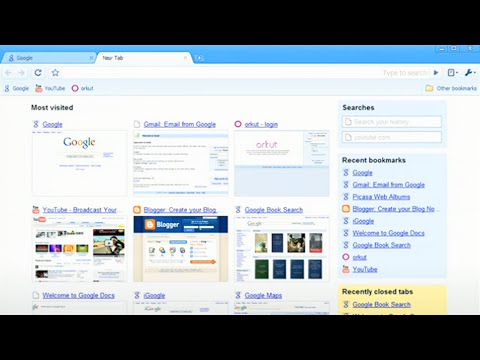
Upon opening, Chrome lists thumbnails of most visited sites by default. Extended Validation SSL sites are indicated as well as "dangerous" sites, like known phishing sites.

The great potential of Chrome is with performance. Tabs are within the window and through multi-threading architecture. Each window, actually each task, is allocated its own single process. This is great if you are browsing via multiple tabs and if one tab mucks up and crashes, the entire browser will not seize (hear that Internet Explorer developers?)

Yet, as with any new relationship it is easy to overlook the flaws. Chrome has yet to pass the Acid3 test, allowable because it is still is beta, and there does not seem to be the high customization ability that Firefox has with extensions. Also, Chrome is currently only available for Windows, but Linux and Mac compatible versions are on the roadmap.

This new browser, as with many new browsers and search engines, holds promise of being "the _____ killer."

So far, it looks good, but time will tell.


Download Chrome beta: http://www.google.com/chrome

Tuesday, September 2, 2008

Google on Google Chrome - comic book


This site unofficially covers Google™ and more with some rights reserved. You can subscribe to the feed, email your tips and join our forum!


Google Chrome Screenshots

Google announced their browser Google Chrome to be available on Tuesday, but their download page and tour was already partly available at gears.google.com/chrome/ just now, as Uval in the forum noticed. While the download itself didn’t work when I tried, I was able to extract some screenshots, from the frontpage but also the YouTube videos. And while the product tour videos themselves seemed to require a special group membership at YouTube, the video still previews are public and you can paste the video identifier into a URL like this one to see more high quality stills.

Google Chrome is Google's browser project; this comic book by Google, drawn by Scott McCloud, is scanned here and shown under its Creative Commons license.
http://blogoscoped.com/google-chrome/

Cloud computing is here now; software as a service may be longer

By Mitchell Hall | Tuesday September 2 2008 - 09:02am


Copyright © Fairfax Business Media
Fairfax Media Publications Pty Limited, 2008

Monday, September 1, 2008

A New Battle Is Beginning in Branding for the Web


For the empirical proof, look at the filings with the government for new trademarks that, put simply, are brand names.

Applications surged in the dot-com years, peaking in 2000 and then falling sharply for two years, before rising to a record last year of more than 394,000.

Recently, a new front has opened in the Internet branding wars.

It lies beyond putting trademarks on new businesses, Web site addresses and online logos. Now, companies want to slap a brand on still vaguely defined products and services in the uncharted ephemera of cyberspace — the computing cloud, as it has come to be known.

Cloud computing usually refers to Internet services or software that the user accesses through a Web browser on a personal computer, cellphone or other device. The digital service is delivered remotely, from somewhere off in the computing cloud, in the fashion of Google’s Internet search service.

Dell has tried to trademark the term cloud computing itself. But in August, the United States Patent and Trademark Office sent a strong signal that cloud computing cannot be trademarked.

It issued an initial refusal to Dell, which filed its application 18 months ago, when the term was less widely used in industry conversations and marketing.

Dell had passed early steps toward approval, but the office turned it down, after protests from industry experts that cloud computing had become a broadly descriptive term, and not one linked to a single company. Dell can appeal, but that seems unlikely.

In recent years, patents — not trademarks — have been the main focus of intellectual property experts and the courts, especially around the issue of whether patents on software and business methods have become counterproductive, inhibiting innovation.

But some legal experts say trademark issues may take on a higher profile, fueled by the escalating value of brands in general and trademark holders increasingly trying to assert their rights, especially on the Internet.

“Trademark is the sleeping giant of intellectual property,” said Paul Goldstein, a professor at the Stanford law school.

Microsoft, for example, is developing a technology that is intended to synchronize the data on all of a person’s computing devices, even synchronizing it with family members and work colleagues as well, automatically reaching across the cloud.

When Microsoft announced the concept this year, it said the technology would be called Live Mesh. Just what it is and how it may work remains unclear, but Microsoft filed for a trademark on Live Mesh in June, an application that awaits judgment from the Patent and Trademark Office.

Mesh and mesh networking are widely used terms for technology that connects devices.

“This is the challenge for our examiners,” said Lynne G. Beresford, commissioner for trademarks in the Patent and Trademark Office. “With emerging marks in a field that is changing quickly, you have to make a determination about what the common understanding is.”

That challenge, legal experts say, is one of several for trademark policy and practice in the Internet age. Instant communication, aggressive business tactics and an unsettled legal environment, they say, mean that trademark disputes on the Internet will increase in number and intensity.

The first round of trademark conflict on the Internet, focused on cybersquatting, has subsided. Cybersquatters were early profiteers who bought up the Web addresses, or domain names, of well-known trademarked brands, and then tried to charge the companies huge amounts of money to buy them.

In 1999, Congress passed a bill against cybersquatting that allowed companies to sue anyone who, with “a bad faith intent to profit,” buys the domain name of a well-known brand. The same year, the Internet Corporation for Assigned Names and Numbers, a nonprofit oversight agency, established a system for resolving domain name disputes.

The new areas of conflict, according to legal experts, include trademark owners trying to assert their rights to stifle online criticism of their products, and to stop trademarked brands from being purchased as keywords in Internet search advertising.

Early court rulings in keyword cases point to the uncertain legal setting and the international differences in trademark law. In the United States, lawyers say, the initial rulings have tended to allow companies to buy the trademarked brand names of rivals as keywords in search. Ford, for example, can bid on and buy “Toyota,” so that a person typing Toyota as a search term would see a link to Ford’s Web site in the paid-for links on the right hand side of Google’s Web page.

In the United States, that practice has not been interpreted as causing any fundamental consumer confusion. Google also argues that because any bidder can make an offer for any word — Google supplies no list — it is not a user of trademarks. “We are not using keywords, we are not selling keywords, we are selling ad space,” said Terri Chen, Google’s senior trademark counsel.

But in a French court ruling in 2005, Google was enjoined from allowing others to buy as a keyword the trademark brand of a French luxury goods maker, Louis Vuitton. For countries other than the United States, Canada, the United Kingdom and Ireland, Google has a trademark complaint system, so holders can generally prevent their brands from being purchased as keywords by others.

The speed of Internet communication and heightened competition to claim and establish brands have drastically changed trademark tactics over the years. Compare the positioning and pre-emptive moves around cloud computing with the gradual pace of building one of the most valued brands in the world, Microsoft’s Windows.

The use of personal computer windows and graphical user windowing systems were around long before Microsoft announced its plans for a Windows operating system in 1983. The first version was introduced in 1985, and Microsoft did not file for a trademark until 1990. Its application was initially rejected as “merely descriptive.”

But, as so often, Microsoft persevered. It kept investing in advertising, branding and product development. It presented the Patent and Trademark Office with surveys showing people had come to associate the term Windows with Microsoft, and in 1995 the trademark examiners finally agreed.

With its cloud computing project Live Mesh, Microsoft is taking a far faster, more focused approach. It is employing Live, which it uses in other Internet offerings, like Windows Live and Xbox Live, as half of a two-word trademark — or composite mark, in legal terms. “Mesh networking is the generic category, but Live Mesh is Microsoft’s implementation and acts as a source identifier,” said Russell Pangborn, Microsoft’s director for trademarks.

One thing that has been undeniably transformed by computing and the Internet is the trademark office itself. Ms. Beresford, a professed “trademark nerd,” recalled that when she joined the office in 1979, searches for the same or “confusingly similar” trademarks began in the “search room.” The applications and registration documents were kept in wooden cabinets, filed alphabetically.

Trademarked images were kept in separate drawers and grouped into visual categories, she recalled, like “grotesque humans” (the Pillsbury doughboy) and “human body parts” (the Yellow Pages’ walking fingers).

Examining attorneys, Ms. Beresford noted, were issued rubber covers for their index fingers for going through files faster and with fewer paper cuts. The technology tools have been upgraded considerably since then. The work is now done mainly on computers, searching the Web and specialized trademark databases. Eighty-five percent of the office’s 390 examining attorneys work primarily from home.

The search room, Ms. Beresford observed, has “gone the way of the buggy whip.”

Copyright 2008 The New York Times Company

‘A really cheap laptop is a myth’

1 Sep, 2008, 1202 hrs IST,TNN
http://infotech.indiatimes.com/articleshow/msid-3430906,flstry-1.cms


NEW DELHI: Having identified mobility, green IT and virtualisation as trends driving computing, PC major Dell is running a global road show--Future of Computing Tour--to discuss these trends.

Inaugurating the India leg of the tour, Dell India general manager Sameer Garde told ET what these trends translate into for the PC maker and how its retail strategy in India differs from other markets. Excerpts:

What is the Future of Computing Tour all about?
It’s a global Dell platform for discussing key trends with our customers and showcasing our products, services and solutions. We do this is in all of the 150-odd countries we’re present in.

What’s behind the choice of these trends?
Mobility, green IT and virtualisation are the top three trends which the customers are telling us. Customers are no longer asking for ‘this much memory’ or ‘so many giga hertz’.

Most companies are concerned about power consumed by their data centres. Five years from now, data centres in India would need about 20,000 mw.

To address this, we are working on redesigning data centres so that they consume less power, as well as using virtualisation and blade servers that use 25 per cent less power and take much less space.

These are initiatives for the ‘connected’ or existing PC users. What about the ‘unconnected’?
We have launched a range of affordable Vostro PCs for the SMBs who want to get connected to the Internet. However, there is a great need to increase broadband penetration in the country.

How about a low-cost PC?
Affordability is a key aspect of buying IT products, but it’s not everything. A really cheap laptop is a myth and I don’t think consumers are really looking for it. They are looking for a reasonably-featured and good-looking product.

You announced a tie-up with retailer Croma for distribution in India. But no such tie-ups after that. Why?
The India market is really different. In markets like the US, Europe and China, the consolidation of retail is very high. In India, a lot of consumers still prefer to buy from their regular, small multi-brand stores.

So, we are present through such smaller multi-brand stores in about 150 cities. We are careful about over-distribution, which companies tend to indulge in, leading to competition among channel partners.

Copyright © 2008 Times Internet Limited. All rights reserved.

About CherryPal for Everyone (CP4Every1 or CPFE)

CP4Every1 is constantly crawling the web (on human hands and knees) to find unique information of value regarding green technology, cheap and reliable connectivity, personal, portable and sustainable industry developments, future and social/cultural transformative technology, political relevance and news that is NOT just another re-posting of the same press release pushed out by the industry.

Please note that all copyrights and links to original material are provided and respected. NO robots were used to post content.

Your comments are invited.


Enter your Email to receive CPFE Updates


Preview Powered by FeedBlitz

ENTER CODE CPP206

ENTER CODE CPP206
for $10 off purchase price
AEoogle

Search

Scroll to bottom for Google Custom Search Results

Search Results

Other CherryPal Brand Angel Blogs